My view on the novel

When reading Brave New World I thought it would be very similar to The Giver. The typical utopia turned dystopia. When I began reading I realized complex character relations and internal conflict that the characters faced. John, the only character and person in the World State that has a mother, uses Shakespeare to help him deal with his emotions. John symbolizes the closest thing to a modern human in the novel.

I think Aldous Huxley did a phenomenal job at tackling problems that will most likely be around for a long time: addiction to drugs, dependence on technology, and the absence of emotion. These things that people dealt with when the book was written in 1932 are still being dealt with today. People are still addicted to drugs, we still look to technology for the next answer, and we all somehow deal with the difficulty of emotion. I believe that when Aldous sat down to write his novel, he took the pain of his childhood, and knew that it would be carried with him till he died. Aldous was a pessimist and wanted to point out what baggage we will be carrying with us for the next 100+ years. It’s been almost 90 years since his publishment, and ironically, guess what? Every single one of the problems he wrote about is still relevant. Even with absolute power, we see communist countries struggle to survive on their own and try to recover. We see foreign relations fall through because we must ask ourselves, does equality really exist? Will all countries truly recognize each other as a good country. Will we all start seeing different looking human beings as equal?

We can all hope for equality, but what Huxley might have hinted to in Brave New World is that there will always be an obstacle for normalcy.

A similar view on Brave New World

The Conversation writes about the controversies of Soma, a drug in Brave New World, and how it is affecting its characters. The article compares how babies are treated in the novel, to how advertising can affect young children.

Advertising has always targeted the younger generations. This is the point I agree with the most from the article, because as a child I remember 99% of the commercials on Disney Channel were toy ads. They were designed to get my attention, then to make me want the toy so bad that I go and tell my parents that I want that toy, which will hopefully convince them to get it for me. This same thing occurs with the children in the novel. They are conditioned to have a “hatred of books and flowers” because those things are found to invoke freedom (Huxley 22).

The D.H.C. goes on to say that instead of intellectual books and flowers, the children have been conditioned to “love all country sports” because it increases transportation use (Huxley 23). The leaders have chosen to act on the children’s vulnerability to profit and control them. The manipulation of young minds has always been important to marketing strategies, because they’re simply vulnerable. They’re easy to manipulate, especially without a parent in the novel, and can be psychologically damaged by this behavior.

This manipulation can lead to substance abuse. We’ve seen it with the tobacco industry, and the malicious targeting that they had done to younger people in order to persuade them to just try one, just one, it won’t hurt.

This article perfectly sums up how the World State operates directly through the use of manipulation and through that drugs.

Sampson, Tony D. “Brave New World: the Pill-Popping, Social Media Obsessed Dystopia We Live In.” The Conversation, The Conversation, 9 Oct. 2018, theconversation.com/brave-new-world-the-pill-popping-social-media-obsessed-dystopia-we-live-in-72511.

We’re living in a Brave New World

In Brave New World, Huxley’s motive for writing the novel is to warn society of their addictions and dependencies. The magnification of the helpless masses shows Huxley’s concern for people that have little say in their society. It is a society that is taught to never want what they can’t have, to never have emotion, and to practice consumerism.

Brave New World is a spin-off of modern day society. We’re all indulging in something in order to distract us from real authentic reality; whether it’s our phones, love, lying, plastic surgery, food, or shopping. We use these things to give us a temporary burst of happiness, but inevitably they wear off. We see these short term fixes as a way out of the chaos or pain just like citizens of the World State. The World State encourages citizens to take soma whenever they feel any emotional discomfort at all. This modern day muscle relaxer lets an entire society be blinded by truth and beauty. Huxley further emphasizes this idea by adding “a gramme is better than a damn” to exemplify the loss of feeling (Huxley 54).

We must choose what will satisfy us for the long run. We must overcome the addiction to familiarity. We must not let this speculation rule our lives.

Sampson, Tony D. “Brave New World: the Pill-Popping, Social Media Obsessed Dystopia We Live In.” The Conversation, The Conversation, 9 Oct. 2018, theconversation.com/brave-new-world-the-pill-popping-social-media-obsessed-dystopia-we-live-in-72511.

Looking at a world with Marxism

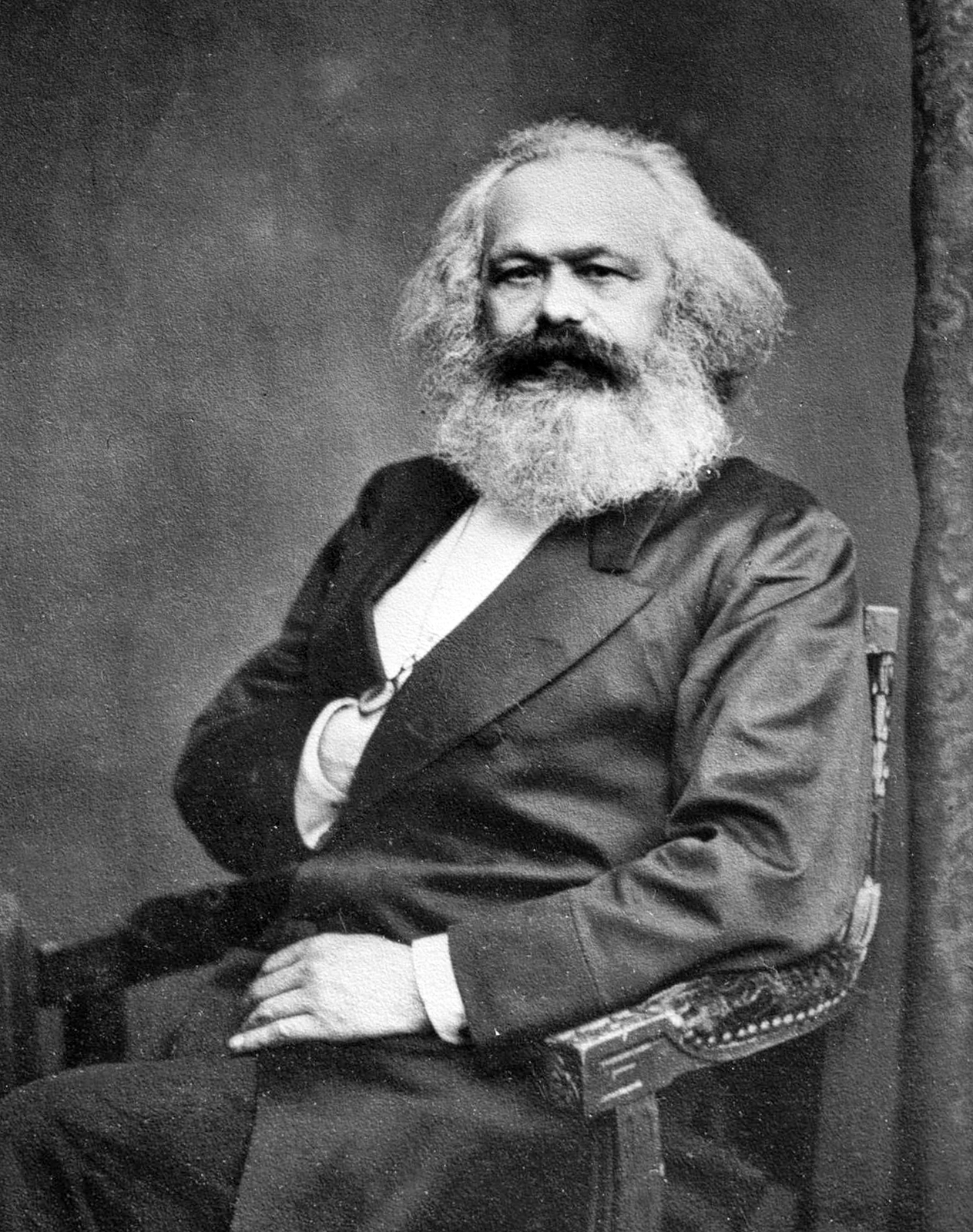
If you’re not familiar with Marxism, the simple definition would be social classes create conflict. This idea was portrayed through his Communist Manifesto. Hearing his manifesto reminds me of the Unabomber’s manifesto; in that they both serve as a warning to society, but also threaten society. The Unabomber warned people of the dangers of an advancing technological world while also putting people in danger by packaging explosives. Karl Marx warned of tensions between social classes while simultaneously advocating for mass murder and dictatorship. These two influential people believed so much in something that they thought was good, but didn’t realize the impact of their decisions.

UNSPECIFIED – CIRCA 1865: Karl Marx (1818-1883), philosopher and German politician. (Photo by Roger Viollet Collection/Getty Images)

Marxism solely lies on the back of the exploited working class. Marxism advocates for a mass middle class, which leads to one class. Brave New World slightly alters this Marxist point by having a social caste system (Alpha, Beta, Delta, Gamma, Epsilon)  but conditioning all of them to think they are better and happier than the others while they are developing as young kids. The exploitation of their ego’s essentially makes them all believe they are the best which is equivalent to a massive single class.

Another point made by Marx is the polarization of the classes. This polarization can be shown through comparison of the World State leaders and the Epsilons. The Epsilons are injected with alcohol when they are fetuses are developing. This causes complete polarization, with Epsilons being at a disadvantage from birth, and the World Leaders being lucky by chance to be one of ten rulers. This stark contrast keeps the Epsilons compliant because their knowledge has been stunted by the abuse of the World Leaders.

The last similarity is the value of community over identity. The World State’s motto is “Community, Identity, Stability” (Huxley 3). This aligns with Marx’s idea that community is the core of the government and society in order to achieve anything as a collective.

“Brave New World and the Marxist Theory.” Prezi.com, prezi.com/1t9dsbguwqyd/brave-new-world-and-the-marxist-theory/.

The Age of Technology

Would you go into panic mode if you couldn’t find your phone? Or what if you broke it and everything on it was gone? The 2.9 billion smartphone users would probably agree with the whole panic mode thing.

In this entry I will discuss a major motif I have identified while reading. The first motif I would like to discuss is the idolization of Henry Ford. Throughout the novel the phrases “My Ford” or “The year of our Ford” is often used to crown Ford for the “perfect” society they have created. In the World State’s reality technology is their religion. Instead of some on saying “oh my god!” the members say “oh my ford!” This may seem weird, but when we look at religion in a modern day setting it’s easy to judge one that is not your own, unless you don’t follow a religion then it’s all entirely absurd. This motif of technology as a savior shows just how right Aldous was about our dependence on it in the future. Can you think of the last day you went without your phone? Or the last time you went without social media?

We’re all absorbed into the screens, whether it’s the tiny screen in our hand, the screen of the desktop, or the tv screen broadcasting the never-ending American Ninja Warrior that your not really interested in but you’d rather watch then do anything productive. We use these devices to distract ourselves from a real, raw, natural life. Aldous was correct, in that we’ll always pay reverence to the things that distract us most.

A modern trend that usually leaves participants feeling renewed is a technology detox retreat. People pay to have a week or weekend away from technology to connect with themselves instead of their screens. Would you invest in a retreat for yourself?

Reading about the World State really has me thinking about how much I myself rely on technology. At this very moment I’m typing on a computer with earbuds in which are plugged into my phone. I’m constantly around technology which is why I think I signed up to major in computer science. Because as crazy as it sounds, you can’t escape the screen.


Huxley, Aldous. Brave New World.

Left “Alone”

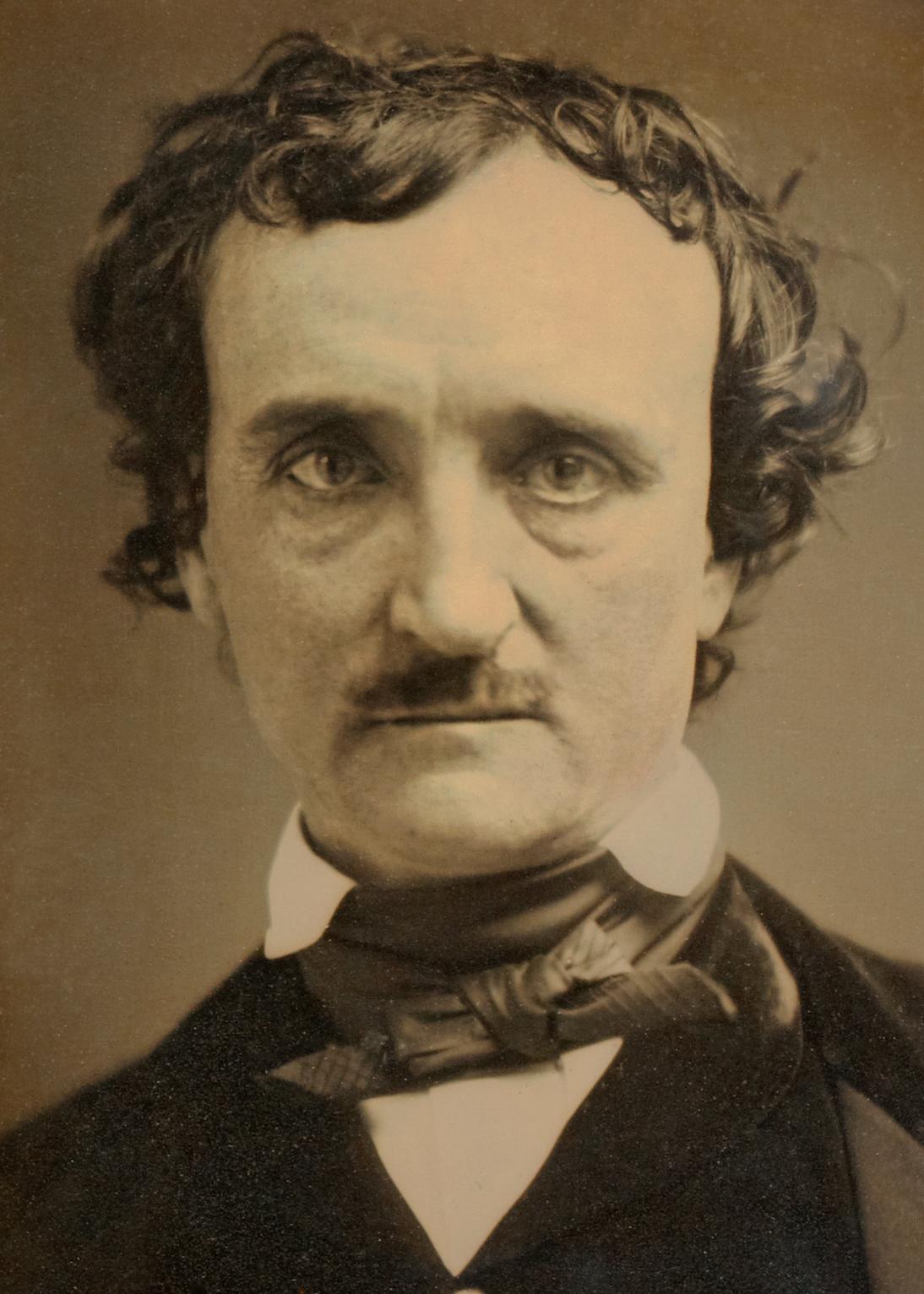
When I was tasked with finding a poem for my literary analysis essay, I instantly was won over by Edgar Allan Poe’s “Alone.” Poe writes about how he has felt isolated for the majority of his life possibly due to a traumatic childhood experience. Poe expresses his unique personality also comes with the blatant fact that he is fundamentally different then most. The excerpt below highlights Poe’s subjective observations:

“From childhood’s hour I have not been

As others were—I have not seen

As others saw”

Poe goes on to state that he finds his passions and sorrows from a different source and the loneliness from that source fuels him to ask himself why he perceives the world so different.

The poem ultimately ends with an answer to Poe’s rhetorical question with:

“From the thunder, and the storm—

And the cloud that took the form

(When the rest of Heaven was blue)

Of a demon in my view—”

I personally imagined this last section of the poem as Poe laying in the grass with his friends on a nice spring day where they’re all glancing at the clouds with their early 1800’s sunglasses. Everyone shouts what they see, “That one’s a bird!” “No it’s a grasshopper!” and Poe being the pessimistic friend simply says “It’s actually a raven.” Poe repeatedly emphasize his peculiarity but finally identifies what seems to be a personal demon controlling him at the end of the poem. The purpose of this poem wasn’t to identify Poe’s demon, but to simply recognize it.

Similar to Poe’s cataclysmic childhood, the way the embryos in Brave New World are treated have a lot to do with their future. At meter 150 on the conveyor belt, the future tropical workers, are treated for “typhoid and sleeping sickness,” and then there after around meter 200 the sex of the babies was established with “a T for the males, a circle for the females and for those who were destined to become freemartins a question mark” (Huxley 23). The genetic engineering of these embryos, at the most vulnerable times of their life, have a tremendous impact on what they will become when they are older and how quickly they will develop.

Both Poe and the embryos are a victim to their environment. They did not have a choice to what had happened to them at such a young age, but they had to make best of what they had.

“Alone by Edgar Allan Poe, a Poem Analysis.” Shadow of Iris, 18 July 2015, http://www.shadowofiris.com/alone-edgar-allan-poe-analysis/.

Forhan, Laura. “‘Alone’ by Edgar Allan Poe.” Prezi.com, 2 Aug. 2015, prezi.com/7mvtg3m5oimr/alone-by-edgar-allan-poe/.

Huxley, Aldous. Brave New World.


A brief intro to Aldous Huxley

Aldous Huxley is best known for his novels Brave New World, Crome Yellow, and Antic Hay which all give a grim satiric taste when read. The publishment of Brave New World, one of the first models for dystopian science fiction, was crafted by Huxley who revealed his fears of 20th century politics, along with its advancement of technology. This fear may have been fueled from Huxley residing in Italy in the early 1930s, where Benito Mussolini led an authoritarian regime, outlawing birth control throughout the country in order to build up enough manpower (more like “childpower”) to fight in the next war whenever it may have come.

When reading about Huxley’s experiences in Italy I instantly thought of a specific passage in the beginning of the novel that reads, “The idea was to make them want to be going out into the country at every available opportunity, and so compel them to use transport.” The children in Brave New World have been conditioned since birth to live their unchosen controlled life, similar to the children created in Mussolini’s regime where child birth was intentionally forced upon in order to protect the country’s future. This plays hand-in-hand with the Marxist theory, which gives emphasis on the importance of community over individuality, while simultaneously polarizing the classes. After all, the World State’s motto is “Community, Identity, and Stability.”

I believe that Huxley may have also drawn out moments from his earlier childhood in England to create the nightmarish novel, such as losing his mother at the age of fourteen and then at the age of sixteen suffering an attack of keratitis, which left him temporarily blind for eighteen months. These treacherous experiences led to an eye-opening novel that allowed the world to take a look at what it could have possibly become.

“Aldous Huxley.” Ohio River – New World Encyclopedia, New World Encyclopedia, http://www.newworldencyclopedia.org/entry/Aldous_Huxley.

“Brave New World and the Marxist Theory.” Prezi.com, prezi.com/1t9dsbguwqyd/brave-new-world-and-the-marxist-theory/.

Huxley, Aldous. Brave New World.

“The Talented Mr. Huxley.” National Endowment for the Humanities, http://www.neh.gov/humanities/2015/novemberdecember/feature/the-talented-mr-huxley.


Welcome!


“Experience is not what happens to you; it’s what you do with what happens to you.” – Aldous Huxley

Hi! I’m Avery and welcome to my Brave New World blog, where I’ll be discussing the novel Brave New World by Aldous Huxley over the next couple of weeks. In my blog you will find out how I analyze the novel through history, poems, the Marxist literary lens, non-fiction criticism, symbolism, and current events. If you’re interested in following me on my literary journey please do not hesitate to click subscribe!

Brave New World Poster Art by Claudia Stocker


“Brave New World: Soma.” Vivid Biology, vividbiology.com/gifts/shop/posters/brave-new-world-soma/.
Design a site like this with WordPress.com
Get started